
Written and edited by Abel B. Daartey, PharmD
- Higher body fat is a recognized risk factor for at least 13 cancer types, based on large human studies and IARC/NCI reviews.
- Extra fat can influence cancer biology through insulin and growth signals, estrogen after menopause, chronic inflammation, adipokines, and gut-bile acid changes.
- Long-term studies suggest cancer risk can fall after substantial, sustained weight loss, especially after bariatric surgery, but risk reduction is not instant or guaranteed.
Obesity is often discussed as a weight issue, but in cancer biology it is better understood as a long-term metabolic and inflammatory state. In 2016, the International Agency for Research on Cancer (IARC) reviewed more than 1,000 studies and concluded that the absence of excess body fat lowers the risk of several cancers. Put another way, higher amounts of body fat are strongly linked to increased risk for a defined group of cancers [1,2].
This is not about blaming people for cancer. Cancer is complex, and body weight is shaped by food systems, biology, income, environment, medications, sleep, stress, and many other factors. But the evidence is strong enough that excess body fat is now considered one of the major modifiable cancer risk factors, alongside tobacco, alcohol, diet, and physical inactivity.
The 13 Cancer Types
IARC and the National Cancer Institute list 13 cancer types with consistent evidence linking them to overweight or obesity: endometrial cancer, esophageal adenocarcinoma, upper stomach cancer, liver cancer, kidney cancer, gallbladder cancer, pancreatic cancer, colorectal cancer, postmenopausal breast cancer, ovarian cancer, thyroid cancer, meningioma, and multiple myeloma [1,2].
The strength of the relationship is not the same for every cancer. It is especially strong for endometrial cancer and esophageal adenocarcinoma, while other sites show smaller but still important increases in risk [2,3].
Why Body Fat Can Change Cancer Risk
Body fat is not just stored energy. Fat tissue, especially fat around the abdomen and organs, behaves like an active endocrine and immune organ. It releases hormones, inflammatory signals, and metabolites that can change how cells grow, repair DNA damage, and respond to stress [4].
Insulin and IGF-1: Excess abdominal fat can make the body less responsive to insulin. When insulin stays high, related growth pathways such as PI3K/Akt/mTOR and RAS/MAPK may become more active. These are normal pathways, but when they are chronically stimulated, they can support cell growth and survival in ways that may favor cancer development [4].
Estrogen: After menopause, fat tissue becomes one of the main places where the body makes estrogen. Higher estrogen exposure helps explain why obesity raises the risk of postmenopausal breast cancer and endometrial cancer [5].
Adipokines and inflammation: Enlarged fat cells release more leptin and inflammatory messengers such as IL-6 and TNF-alpha, while protective adiponectin often falls. This imbalance can keep tissues in a low-grade inflammatory state for years [4]. Chronic inflammation does not automatically mean cancer, but it can create an environment where DNA damage, abnormal growth signals, and immune escape become more likely.
Gut bacteria and bile acids: Obesity can also shift the gut microbiome and bile acid metabolism. In the digestive tract, these changes may affect inflammation, epithelial repair, and local chemical exposure [4]. This is one reason the link between obesity and colorectal cancer is biologically plausible.
Where the Fat Sits Matters
BMI is useful in large studies, but it is an imperfect measure for one person. Muscle mass, body frame, and fat distribution all matter. Fat around the organs, often estimated by waist circumference or waist-to-hip ratio, tends to be more metabolically active than fat under the skin. That is why waist measures can sometimes add useful information beyond BMI alone.
Weight Loss and Cancer Risk Reduction
The strongest human evidence that sustained weight loss may reduce cancer risk comes from bariatric surgery studies. In the SPLENDID study, adults with obesity who had bariatric surgery had lower rates of obesity-related cancer and lower cancer-related mortality over about 10 years compared with matched patients who did not have surgery [6].
That finding is important, but it should be read carefully. Bariatric surgery produces large and sustained weight loss, so its results cannot automatically be applied to every diet plan, supplement, or short-term weight-loss program. Observational studies also suggest that sustained weight loss in later adulthood may be linked to lower breast cancer risk in women, but this area still needs more careful research [2].
Even when cancer outcomes take years to measure, modest lifestyle changes can improve insulin sensitivity, blood pressure, liver fat, and inflammatory markers much sooner. Those changes matter for overall health, even if no single change can promise cancer prevention.
What This Means Practically
The message is not that body weight alone determines cancer risk. It does not. The practical message is that metabolic health matters. Eating more fiber-rich foods, limiting ultra-processed foods and alcohol, moving regularly, sleeping better, and getting help for sustainable weight management can all push the body toward a less inflammatory, less insulin-resistant state.
For some people, medical treatment for obesity may be appropriate. That decision should be made with a clinician, especially for people with diabetes, liver disease, cardiovascular risk, cancer history, or medication-related weight gain.
This article is for science education only and is not medical advice. Weight and cancer risk are personal and complex, so decisions about weight-loss medications, bariatric surgery, screening, or diet plans should be made with a qualified health professional.
References
- Lauby-Secretan B et al. (2016) Body fatness and cancer: viewpoint of the IARC Working Group. N Engl J Med 375:794-798. doi:10.1056/NEJMsr1606602.
- National Cancer Institute. Obesity and Cancer Fact Sheet. Available at: https://www.cancer.gov/about-cancer/causes-prevention/risk/obesity/obesity-fact-sheet.
- Renehan AG et al. (2008) Body-mass index and incidence of cancer: a systematic review and meta-analysis of prospective observational studies. Lancet 371:569-578. doi:10.1016/S0140-6736(08)60269-X.
- Avgerinos KI et al. (2019) Obesity and cancer risk: emerging biological mechanisms and perspectives. Metabolism 92:121-135. doi:10.1016/j.metabol.2018.11.001.
- Brown KA (2021) Metabolic pathways in obesity-related breast cancer. Nat Rev Endocrinol 17:350-363. doi:10.1038/s41574-021-00487-0.
- Aminian A et al. (2022) Association of bariatric surgery with cancer risk and mortality in adults with obesity: SPLENDID. JAMA 327:2423-2433. doi:10.1001/jama.2022.9009.
- World Cancer Research Fund. Weight and cancer risk. Available at: https://www.wcrf.org/preventing-cancer/topics/weight-and-cancer/.
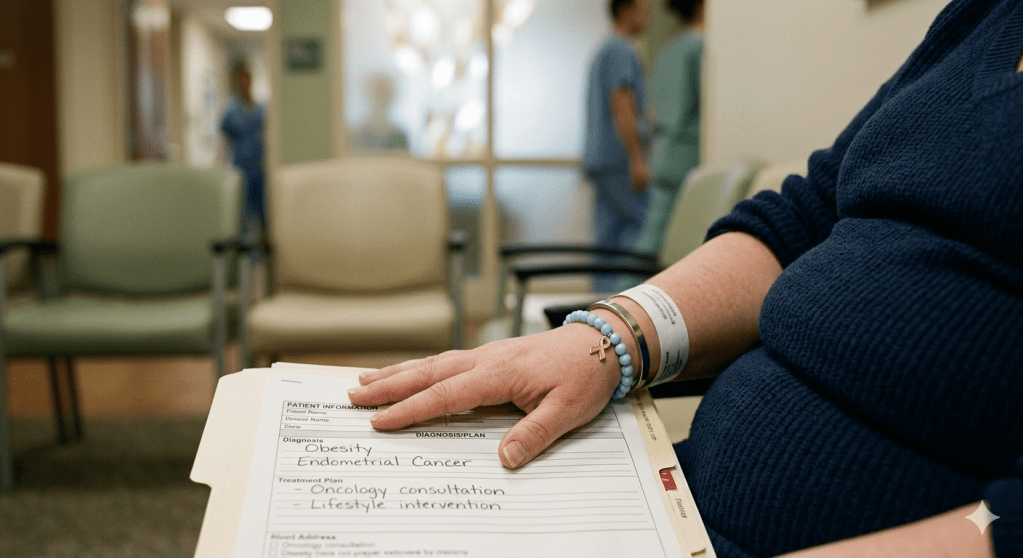
Featured image created using Google Gemini AI.


 BreathPharma
Leave a comment