
Written and edited by Abel B. Daartey, PharmD
- Sugar does not selectively “feed” cancer in the simple way social media often claims. The real biology is more nuanced.
- Chronically high intake of added sugar can raise cancer risk indirectly by promoting weight gain, insulin resistance, inflammation, and fatty liver disease.
- The practical goal is not to fear fruit, beans, or whole grains. It is to reduce sugary drinks and ultra-processed foods that overload metabolism over time.
Few cancer myths spread faster than this one: “Sugar feeds cancer.” It sounds logical because cancer cells use glucose. It also sounds frightening because sugar is everywhere. But the full story is more careful, and more useful, than simply telling people to avoid every carbohydrate.
The better question is not whether cancer cells use sugar. They do. The better question is whether eating sugar gives cancer a special fuel that healthy cells do not use. That part is where the myth breaks down.
Where the Myth Comes From
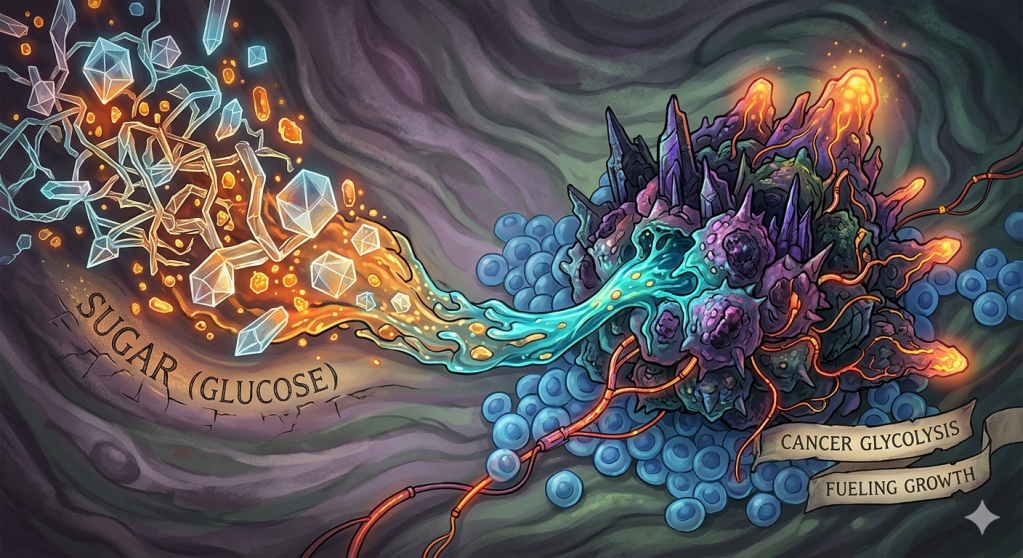
The “sugar feeds cancer” idea comes from a real discovery called the Warburg effect. In the 1920s, Otto Warburg observed that many cancer cells use glucose through glycolysis even when oxygen is available. Modern cancer metabolism research confirms that rapidly dividing cells often consume a lot of glucose because they need energy and building blocks to make new cells [1].
But this does not mean sugar only feeds cancer. Your brain, immune cells, red blood cells, and many normal tissues also need glucose. The body keeps blood glucose within a narrow range. So the idea that someone can starve cancer by removing all sugar from the diet is not supported by the biology.
That matters because cancer patients may already be struggling with appetite, weight loss, nausea, or treatment fatigue. Extreme diet rules can sometimes do harm if they make people eat too little or delay evidence-based care.
Where Sugar Really Matters
The real concern is not one biscuit, one mango, or one bowl of rice. The concern is a long-term eating pattern that keeps pushing the body toward high insulin, insulin resistance, excess body fat, and chronic inflammation.
When the body becomes insulin resistant, it often makes more insulin to keep blood sugar under control. Insulin and insulin-like growth factor 1, or IGF-1, can activate growth pathways such as PI3K/Akt/mTOR. These pathways help cells grow and survive. In cancer biology, that kind of signal can matter, especially in tissues already under metabolic stress [2].
High-glycemic diets, meaning diets that raise blood sugar quickly, have been linked with small increases in risk for some cancers in meta-analyses, although the evidence is not equally strong for every cancer type [3]. So the careful message is this: sugar is not a magic cancer fuel, but repeated metabolic stress may help create conditions where some cancers are more likely to develop.
Fructose Is a Special Case
Fructose deserves special attention because the liver handles much of it. High intake from sugary drinks and high-fructose corn syrup can push the liver toward fat production, fatty liver disease, and inflammation. These are not good long-term signals for cancer prevention.
A mouse study in Science found that high-fructose corn syrup enhanced intestinal tumor growth in a colorectal cancer model, even without causing obesity [4]. That is important mechanistic evidence. Still, it is an animal study, so it should not be translated into a simple human rule like “one sweet drink causes cancer.” Biology does not work that way.
Added Sugar, Weight, and Cancer Risk
The strongest cancer link is through body fatness. Excess body fat is associated with higher risk of at least 13 cancer types, including colorectal, liver, kidney, pancreatic, endometrial, postmenopausal breast cancer, and others [5,6]. This connection is supported by population studies, mechanistic research, and cancer-prevention reviews.
Body fat is active tissue. It can increase inflammation, change hormone signaling, raise insulin levels, and alter immune function. Sugary drinks and ultra-processed foods can contribute to that environment because they make it easy to take in a lot of calories quickly, often without much fiber or fullness.
What This Means in Real Life
The evidence does not support panic about all carbohydrates. Whole foods that contain natural sugars, such as fruits, beans, vegetables, oats, and whole grains, come with fiber, minerals, and plant chemicals that support metabolic health. These foods are not the problem.
The bigger concern is the daily pattern: sodas, sweetened teas, energy drinks, candy, pastries, and highly processed snacks replacing balanced meals. Over time, that pattern can increase weight gain, insulin resistance, fatty liver disease, and inflammation. Those are the conditions that matter more for cancer risk.
The Bottom Line
Sugar does not selectively feed cancer in the dramatic way many online claims suggest. But chronically high added-sugar intake can still raise cancer risk indirectly by damaging metabolic health.
So the message is not “fear every carbohydrate.” The message is simpler: protect your metabolism. Drink fewer sugary beverages, eat more fiber-rich foods, move your body, and avoid extreme diet claims that promise to starve cancer without medical evidence.
This article is for general education only and is not medical advice. If you are receiving cancer treatment, talk with your oncology team before making major diet changes.
References
- Vander Heiden MG, Cantley LC, Thompson CB. Understanding the Warburg effect: the metabolic requirements of cell proliferation. Science. 2009;324(5930):1029-1033. https://doi.org/10.1126/science.1160809
- Kasprzak A. Insulin-like growth factor 1 signaling in glucose metabolism in colorectal cancer. Int J Mol Sci. 2021;22(12):6434. https://doi.org/10.3390/ijms22126434
- Turati F, Galeone C, Augustin LSA, La Vecchia C. Glycemic index, glycemic load and cancer risk: an updated meta-analysis. Nutrients. 2019;11(10):2342. https://doi.org/10.3390/nu11102342
- Goncalves MD, et al. High-fructose corn syrup enhances intestinal tumor growth in mice. Science. 2019;363(6433):1345-1349. https://doi.org/10.1126/science.aat8515
- Lauby-Secretan B, et al. Body fatness and cancer: viewpoint of the IARC Working Group. N Engl J Med. 2016;375:794-798. https://doi.org/10.1056/NEJMsr1606602
- National Cancer Institute. Obesity and Cancer Fact Sheet. https://www.cancer.gov/about-cancer/causes-prevention/risk/obesity/obesity-fact-sheet
- Rock CL, et al. American Cancer Society guideline for diet and physical activity for cancer prevention. CA Cancer J Clin. 2020;70(4):245-271. https://doi.org/10.3322/caac.21591
Featured image created using Google Gemini AI.


Leave a Reply